Decoding Time Zone Shifts and Their Effects on Cross-Border Live Poker Tournament Participation Rates
Bianca Hartmann · Nov 20, 2026
Decoding Time Zone Shifts and Their Effects on Cross-Border Live Poker Tournament Participation Rates
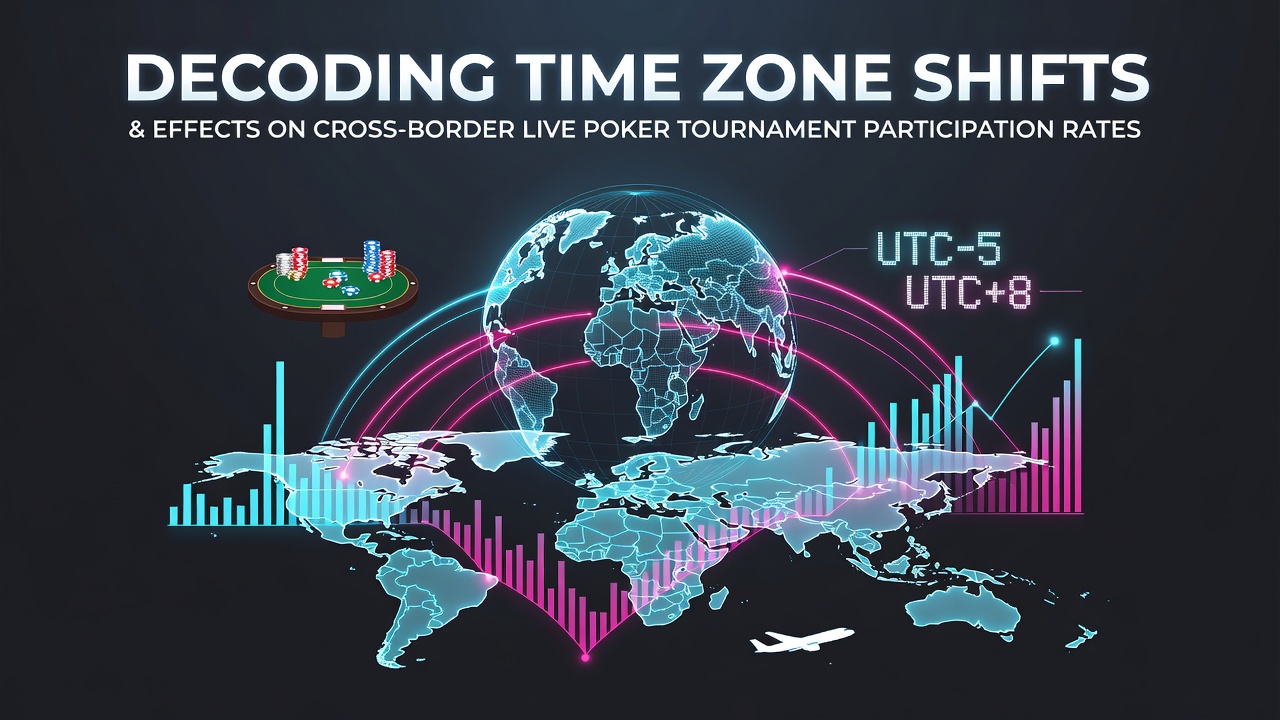
Time zone shifts create measurable disruptions for players who cross borders to enter live poker tournaments, and data from multiple regions shows corresponding dips in participation when events straddle significant hour changes. Observers note that daylight saving transitions in November 2026 will again alter start times for several marquee series that draw competitors from both North America and Europe, forcing adjustments in travel plans and recovery windows. Researchers tracking entry numbers across major circuits have recorded lower turnout from distant time zones during these periods, while local players maintain steadier registration figures.
Physiological Impacts Documented in Tournament Data
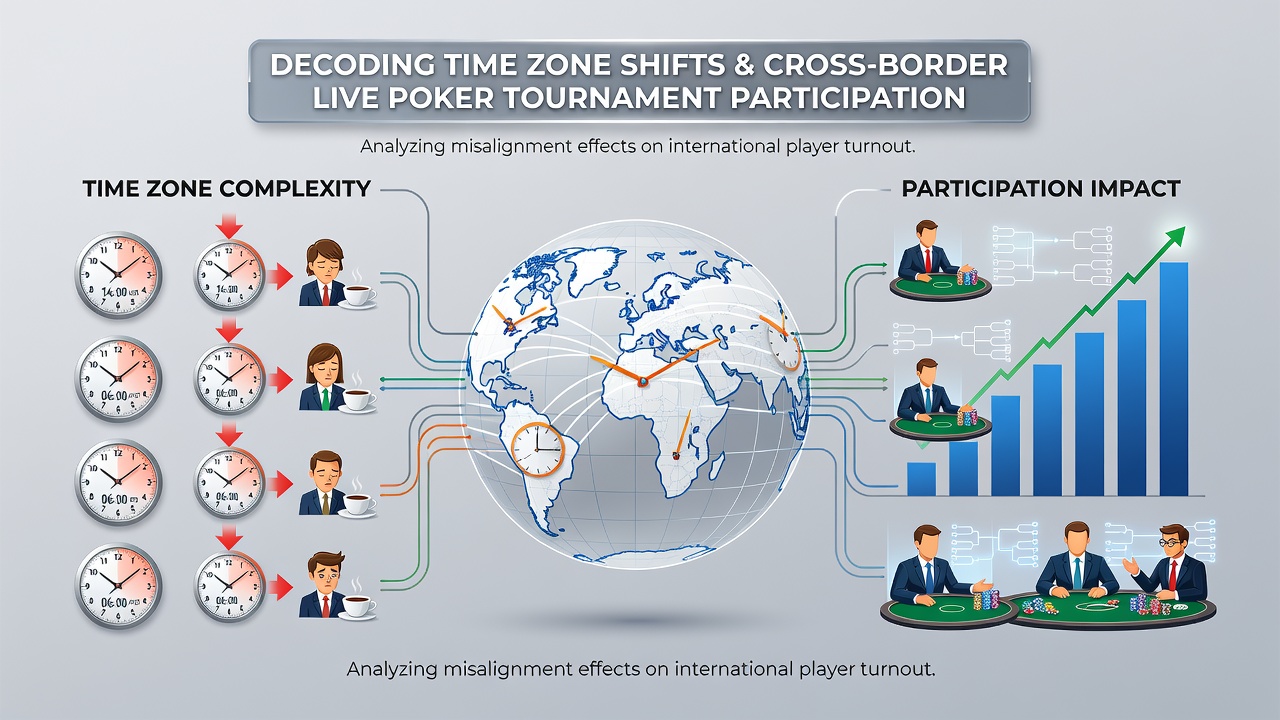
Jet lag and circadian misalignment affect cognitive functions that poker demands, including risk assessment and sustained attention, and studies compiled by academic groups in Australia and Canada link these effects to measurable performance variations. When clocks spring forward or fall back, players traveling eastward often experience shortened sleep cycles that compound over multiple days of play. Figures from event organizers reveal that participation rates from players based more than six time zones away decline by double-digit percentages in the weeks following such shifts, whereas participants from adjacent zones show minimal change.
Scheduling Adjustments Across Major Circuits
Event calendars released for late 2026 incorporate staggered start times to accommodate overlapping regional clocks, yet cross-border fields still contract when daylight saving rules diverge between host countries. Tournaments held in the United States during the first week of November routinely list fewer entrants from Western Europe compared with October or December events. Similar patterns appear in European Poker Tour stops that fall after North American clock changes, according to registration summaries published by the European Gaming and Betting Association.
Organizers respond by publishing multiple daily schedules and offering satellite qualifiers at varied hours, yet these measures do not fully offset the participation drop recorded among long-haul travelers. Data indicates that players from Asia-Pacific regions reduce entries most sharply when events coincide with the North American fall-back weekend, because the combined effect of travel fatigue and an extra hour of clock adjustment narrows available rest periods.
Regional Participation Trends and Supporting Research
Analysis of entry logs from 2023 through 2025 demonstrates that North American-hosted events lose between 12 and 18 percent of their international field when daylight saving transitions occur within seven days of the start date. Comparable reductions appear in Australian and Canadian series that cross the same seasonal boundaries. A report issued by the Nevada Gaming Control Board tracks these fluctuations through official tournament filings and attributes the pattern primarily to travel logistics rather than prize pool size.
Universities in Canada have published findings on sleep disruption among competitive card players, showing that eastward travel across five or more zones correlates with slower decision times during early tournament stages. Those same studies note that westward travel produces smaller, shorter-lived effects. Participation statistics collected by the Australasian Gaming Council reflect parallel outcomes for events scheduled immediately after regional clock changes, confirming that the phenomenon spans multiple continents.
Case Examples from Recent Seasons
One series held in Las Vegas during the first week of November 2025 recorded 14 percent fewer European entrants than the preceding month, while a concurrent stop in Prague drew reduced numbers from the western United States. Both events maintained comparable prize pools and marketing efforts, yet the time-zone gap produced consistent shortfalls. Satellite qualifiers offered at earlier hours captured some additional remote players, but overall field sizes still contracted compared with non-transition periods.
Another instance involved a festival in Sydney that began two days after the North American spring-forward date; registration data showed fewer participants from the eastern United States than in adjacent months. Observers tracking these movements point to cumulative fatigue rather than cost or visa issues as the dominant factor.
Conclusion
Time zone shifts exert a documented influence on cross-border live poker tournament participation, and records from regulatory bodies together with academic research confirm lower entry rates from distant regions during transition windows. November 2026 will present another such period, with daylight saving adjustments in multiple countries likely to repeat the established pattern of reduced long-haul fields. Organizers continue to refine scheduling and qualifier timing, yet the underlying physiological and logistical effects persist across available data sets.